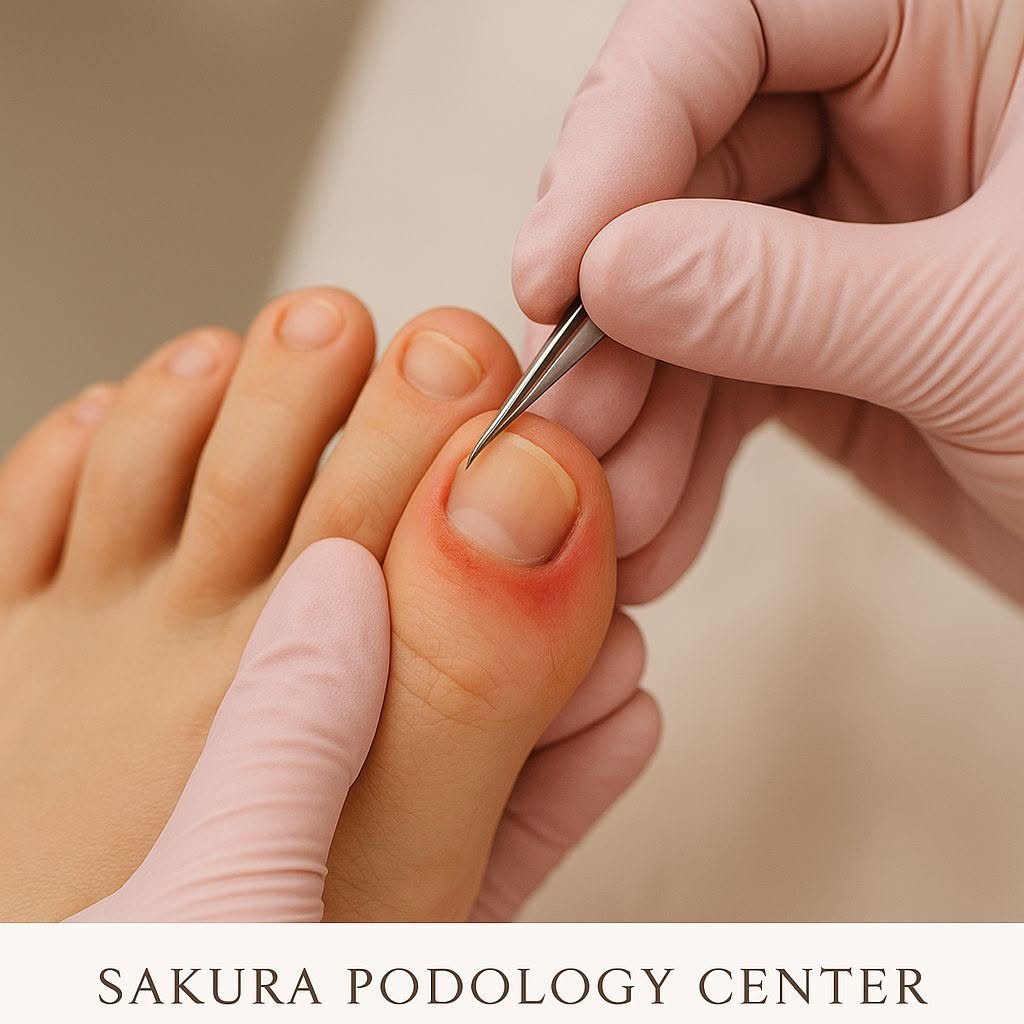
An ingrown toenail (onychocryptosis) is one of the most common foot problems. At the early stage, it may appear as mild discomfort, which is why many people ignore it until pain and inflammation become severe.
Recognizing the first symptoms early helps prevent complications and allows for easier treatment.
What is an ingrown toenail?
An ingrown toenail (onychocryptosis) is a condition where the edge of the nail plate grows into the surrounding skin, usually the lateral nail fold. It most commonly affects the big toe. As the nail continues to press into the tissue, it may cause pain, redness, swelling, inflammation, and sometimes pus discharge. Early intervention makes treatment much easier.
Early symptoms of an ingrown toenail
1. Tenderness and discomfort
One of the first signs is sensitivity around the nail edge. You may notice:
- pain when pressing the side of the toe;
- discomfort while walking;
- irritation when wearing closed shoes;
- increased sensitivity to touch.
Many people mistake this for a minor injury, but it may indicate the beginning of nail penetration into the skin.
2. Redness around the nail
Constant pressure from the nail edge causes an inflammatory response. Symptoms may include:
- redness of the lateral nail fold;
- mild swelling;
- increased local warmth.
This indicates that the surrounding tissue is already irritated.
3. Swelling near the nail border
As the condition progresses, the tissue around the nail becomes swollen, thickened, and painful.
4. Changes in nail growth direction
Pay attention if the nail:
- starts curving inward;
- presses strongly into the nail fold;
- becomes excessively curved;
- leaves pressure marks on the skin.
5. Pain while walking
When the nail penetrates deeper into the tissue, pain becomes more noticeable. Typical sensations include sharp pain on the side of the toe, discomfort inside footwear, and worsening symptoms after prolonged standing.
Why does an ingrown toenail develop?
Main causes include:
Incorrect nail trimming
One of the most common causes is cutting the nail corners too deeply. It's recommended to trim nails straight across, avoid cutting into the corners, and maintain the natural nail shape.
Tight footwear
Narrow shoes compress the toes and force the nail edge into surrounding tissue. Risk increases with narrow toe boxes, high heels, and prolonged pressure on the feet.
Nail structure and anatomy
Some people naturally have highly curved nails, thick nail plates, and increased pressure on the nail folds.
What should you avoid doing?
Do not:
- ❌ cut deeply into the nail corners;
- ❌ puncture inflamed skin;
- ❌ remove the nail yourself;
- ❌ use aggressive treatments without professional advice.
These actions can worsen inflammation and increase infection risk.
When should you see a podiatrist?
A professional consultation is recommended if you experience:
- ✅ persistent pain around the nail;
- ✅ redness and swelling;
- ✅ pain while walking;
- ✅ recurring ingrown toenails;
- ✅ discharge or unpleasant odor;
- ✅ formation of granulation tissue ("proud flesh").
Early treatment usually requires less intervention.
How can a podiatrist help?
Modern podiatry focuses not only on relieving symptoms but also on correcting the underlying cause. A podiatrist may:
- professionally treat the affected area;
- reduce pressure from the nail edge;
- apply corrective nail systems;
- recommend proper home care;
- prevent recurrence.
In many cases, complete nail removal is unnecessary.
How to prevent ingrown toenails?
- ✔️ Trim nails correctly without cutting deep into corners;
- ✔️ Wear comfortable footwear with enough toe space;
- ✔️ Avoid constant pressure on the toes;
- ✔️ Monitor nail changes;
- ✔️ Consult a podiatrist at the first signs of a problem.
The key rule: do not wait until severe pain appears. An ingrown toenail rarely develops suddenly. It usually starts with mild discomfort and gradually progresses to inflammation and pain. The earlier you consult a podiatrist, the easier and more effective the treatment will be.